Why We Homeschool, The Doubts I Had, and What Actually Helped
Our honest story of how we started homeschooling, the fears I worked through as a brand new homeschool mom, and the resources that opened our eyes to a completely different way of learning.
Heads up: a few of the links below are affiliate links. They cost you nothing extra, and if you grab something through them a small commission helps support our family. We only ever link to books, curriculum, and tools we have personally used and genuinely loved.
A quick note before we dive in. This post is for parents who feel pulled toward homeschooling and want to hear how another family actually does it. In no way am I saying you should homeschool. That choice is deeply personal, and only you know what is best for your family. I am sharing our story because I do not want fear to be the thing that talks you out of something you feel called to. If any of this sparks an idea, answers a question, or just helps you feel a little less alone in the wondering, then it did its job.
When we first had our daughter Aniston in 2016, Jake and I never once thought we would homeschool. Not even a little. We both grew up in public school in a small town and did just enough to pass so we could keep playing sports. Neither of us cared that much about school itself. We were there for the sports, the parties, the friends, the whole social side of it. Grades were just the toll you paid to keep doing the parts you actually loved.
The hard part is, a lot of that is still true today, just with social media stacked on top of it. I know because kids tell me. As a dental hygienist for the last 14 years, I have had countless children feel comfortable and safe enough in my chair to tell me how they truly feel about school, and legally nothing they say leaves that room. They tell me they despise school. They tell me they memorize the facts long enough to get the A so their parents are happy, and then they dump it. Hearing the exact same thing Jake and I felt almost twenty years ago, coming out of an eleven year old's mouth in 2026, breaks my heart a little every time.
And it is not just what I hear in my chair. The numbers back it up. The CDC's most recent Youth Risk Behavior Survey found that more than 4 in 10 high schoolers reported feeling persistently sad or hopeless, and almost 1 in 5 had seriously considered suicide. New NCHS data released in April 2025 showed depression in U.S. adolescents and adults has jumped about 60% in the last decade. That is not a vibe shift. That is a generation of kids quietly drowning. When I think back to the light dimming in my own daughter's eyes after just one month of kindergarten, it is hard not to see her as a tiny piece of that statistic.
I want to be clear before I go any further. I am genuinely grateful for schools and for the teachers who pour themselves out every single day, often with very little support. I know not every family has the option to homeschool, and I know it is not the right fit for every family that does. But somewhere along the way most of us were quietly taught that real learning only counts if it happens inside a school building, and I just do not believe that anymore. If homeschooling is something you feel pulled toward and fear is the only thing standing in the way, I want you to know you can do this, and you are very much not alone.
How we actually got here
Aniston started kindergarten right in the middle of COVID. She walked in outgoing and bubbly as ever, but with a mask covering that big smile of hers so no one even got to see it. That was such a difficult season for so many people, and I think we forget sometimes how heavy it was on the kids especially. About a month in, the light in her eyes started to dim. She got quieter when I picked her up. One day she said, "Mom, the boys keep hitting me." Excuse me, what? I was told teachers cannot always catch it, so we signed her up for jiu jitsu, which actually helped her tremendously. I wanted my daughter to know how to stand up for herself.
On top of that, she was getting in trouble for talking to people outside of her "pod" because she might pass the virus. A tiny five year old. That one sat in my heart for weeks.
I remember dropping her off on that first day and standing next to another mom whose son was ten. I was tearing up and she said, "Don't worry, it gets better the more you bring her, it is just hard today." I sat with that for a long time and realized something. We are told we MUST let our kids be independent at five, and that somehow that early push is what builds strong, confident adults. I do not believe that for a second. Those early years are when they are building confidence, learning more than they ever will again, figuring out what lights them up. I felt in my gut that our kids were meant to learn a lot of that from our home and from the world right outside our door.
And the more I started paying attention, the more I noticed how many kids are losing their spark inside that rigid school day. Jonathan Haidt makes this case powerfully in The Anxious Generation, where he lays out how a phone based childhood and an over scheduled, over structured school life are draining curiosity and confidence out of an entire generation. Kids are wired to wonder. If a child suddenly wants to learn everything they can about sharks, or volcanoes, or how a tractor works, the standard classroom does not really have room for that. The bell rings, the worksheet is due, and we are on to the next subject. Curiosity gets treated like a distraction instead of the whole point.
On top of that, school environments are getting harder to learn in, period. The National Center for Education Statistics' most recent School Crime and Safety report shows that about 1 in 5 students ages 12 to 18 say they have been bullied at school, and stopbullying.gov notes that cyberbullying has climbed sharply alongside it, with roughly 1 in 6 high school students reporting they were bullied online in the past year. Teachers are also reporting more behavior disruptions and classroom violence than ever before, with a recent RAND survey of U.S. teachers finding that the majority say student behavior has gotten worse since the pandemic. None of that creates the calm, curious environment most of us picture when we think about a child learning.
I am not sharing those numbers to scare anyone. I am sharing them because for a long time I thought it was just my kid having a hard time, just my gut being dramatic. It is not just you. A lot of kids are quietly struggling in a system that was never really built around how they actually learn.
So while Aniston's light kept dimming, I started sitting in the pickup lane every single day for the next five months, listening to podcasts and reading every homeschool book I could get my hands on. As I learned more, my mind started opening up to a whole different way of learning, and honestly, I was getting really excited about what could be. But the doubts still trickled in right alongside that excitement. Am I going to ruin her chances of having friends? How would I even socialize her? Was she going to be one of those homeschool kids no one wants to interact with? How am I supposed to teach her when I didn't even care much about school myself? If you are a parent reading this and you don't homeschool, I'm sure you've had your own version of these doubts too. Just know I have felt every single one of them.
It was COVID though, and honestly we figured we did not have much to lose because we didn't feel Aniston was getting the type of education and experience she should be getting anyways. So when first grade came around, Jake and I sat down together and made a deal. We would pull her out and try this for ONE year. Just one. That way the pressure was off my shoulders, we were in it as a team, and I would not feel like I was failing my kids. One year cannot hurt.
It turns out we were not alone in wondering. According to the latest NCES data reported by Pew, about 3.4% of K through 12 students in the U.S. are now homeschooled, up from 2.8% before the pandemic. Hundreds of thousands of families had the same gut feeling we did and decided to try something different. That fact alone gave me a little extra courage.
The patient in my dental chair
Here is the part I will never forget. Every six months for about three years, the same patient would sit in my dental chair and listen to me ramble about all the random things we did with our kids, baking together, maple syrup field trips, tea time and read alouds, all the little stuff I just thought of as fun. Every single time she would say, "You know they are learning when you do that. That IS homeschooling."
In my mind I had been taught my whole life that if it is not on paper and there is not a grade attached, it does not count as real learning. She kept gently telling me she had homeschooled her own kids for years, that they graduated, went off to college, and are thriving in their passions today. Those conversations stuck with me long after she left the chair. By the time Aniston was four months into kindergarten and I could see her light going out, I already knew what I needed to do.
John Holt, one of the original voices of the home learning movement, wrote it better than I ever could: "Learning is not the product of teaching. Learning is the product of the activity of learners." Read that again. The first time I really sat with that sentence, something unlocked in me.
What changed when we started
Do I think you have to quit your job, pull your kids, and homeschool? Absolutely not. This lifestyle is not for everyone. We were only able to do this because we had spent years paying off debt and learning to live on Jake's income, so mine was for savings. I went down to part time, two days a week, and started homeschooling the kids.
The first three months felt so strange. I had no curriculum picked out. I had no homeschool community. I had absolutely no idea what I was doing. But the books and podcasts I had been pouring into reminded me of two things. First, I was already homeschooling, I just did not have it on paper. Second, it was going to take time to figure out how MY kids learned best before I could narrow down what to actually use.
And that turned out to be so true. I started finding other homeschool families online, reaching out for meet ups, joining co ops, trying a few different travel friendly curriculums, packing in a lot of outdoor play and field trips. Slowly, a rhythm started to form.
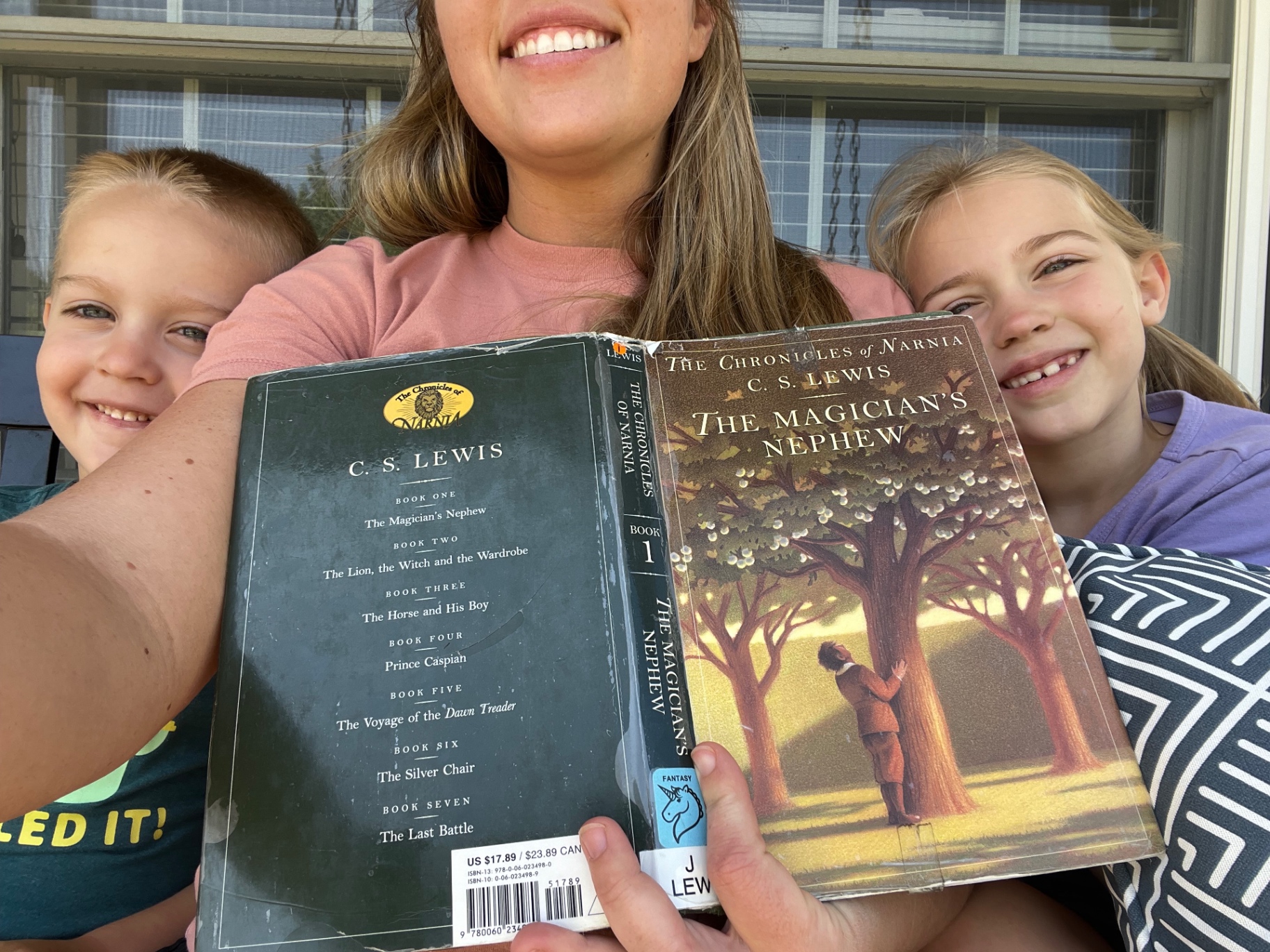
The conversations in our house changed too. Instead of "get your lunch packed for tomorrow," it was "let's stay up late and learn about the stars, and tomorrow we will read our history book on the porch with tea while the bus goes by." Time felt like it slowed down in the best way.
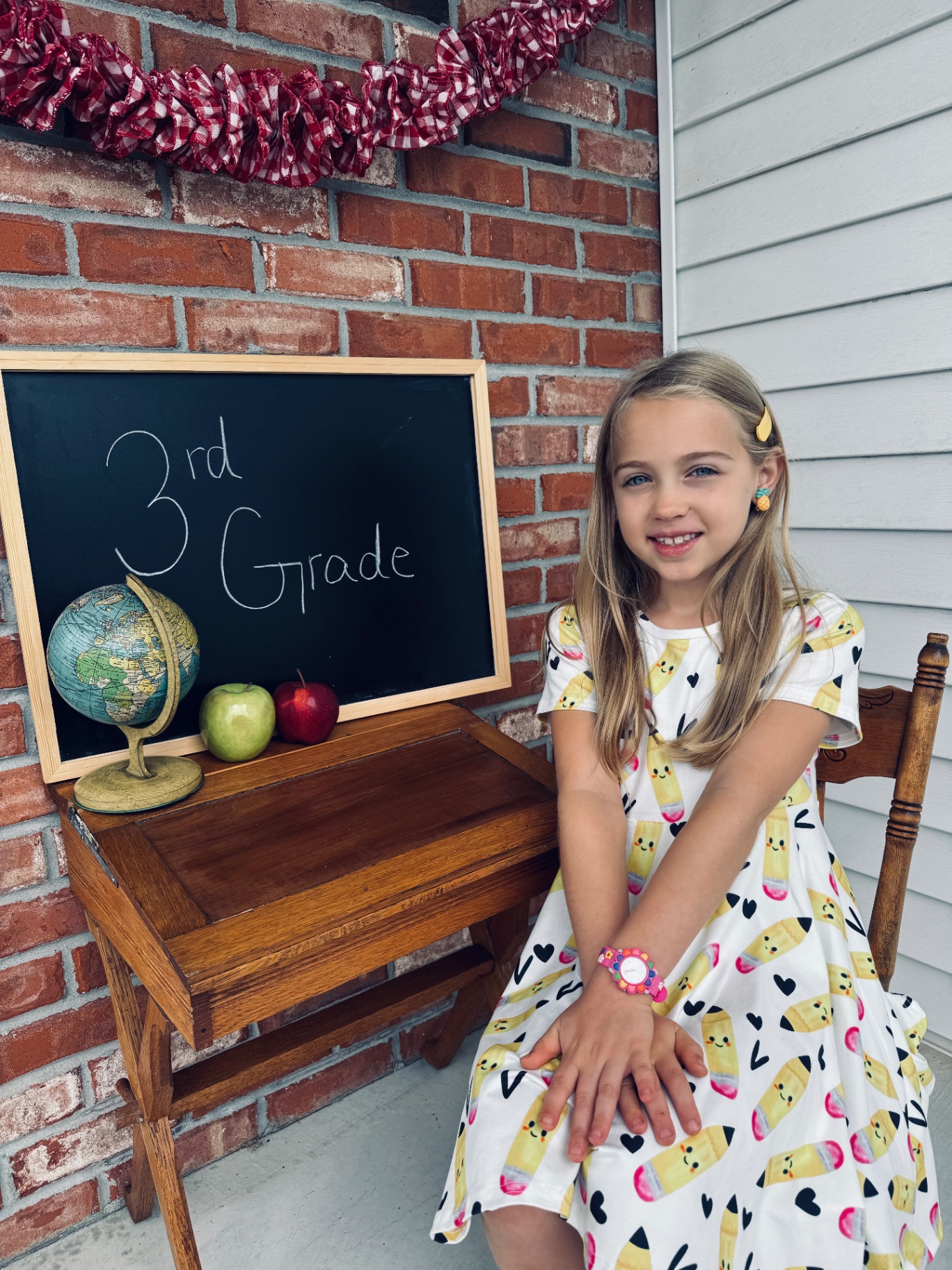
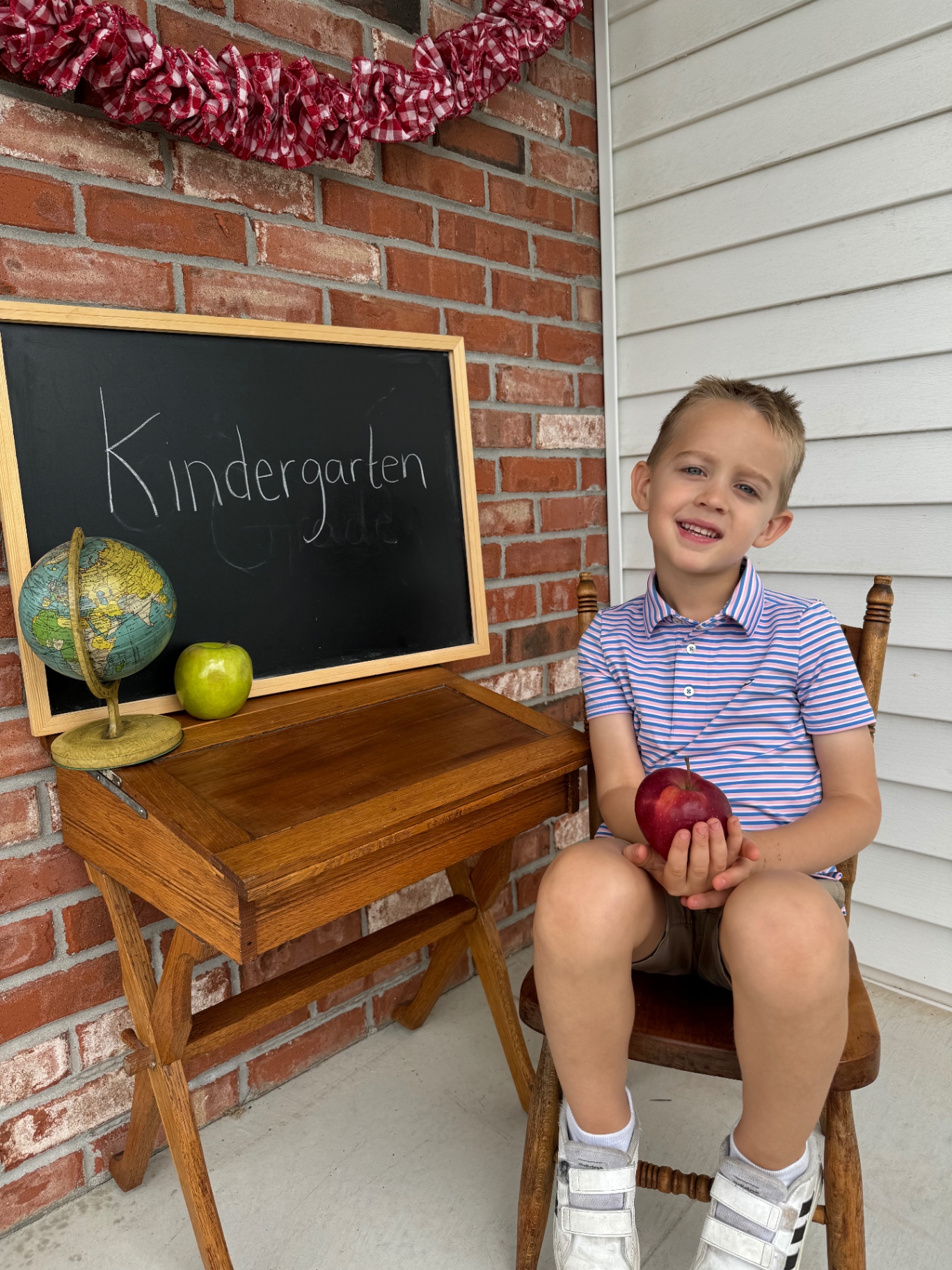
Why we are still doing it, five years in
We are now in our fifth year of homeschooling, and I can say with my whole heart that this has completely changed our lives for the better. The bond between the kids. The freedom of time. The freedom of education. The freedom to travel and turn an ordinary Tuesday into a field trip. Honestly, it would be really hard to go back. We also stay open minded, because we truly do not believe one size fits all, and we do not think you have to homeschool forever. You should do what is best for your family. This has been best for ours.
If you are worried about socialization, please do not be. We are a very outgoing family, and what we have learned is that you do have to be intentional. You make the effort to set up meet ups, you contact local schools to see if your kids can join their sports programs, you find the gyms, studios, and companies that support whatever your child is passionate about, and you sign up for the extracurriculars. The opportunities are out there, you just go grab them.
For class parties and dances, look around for what your local homeschool community already offers, and if there is not one near you, start one. It is so worth it to throw a Valentine's Party when they are little, decorate boxes and exchange cards, or host a Halloween event with a best dressed character contest. All of those little traditions are what made school feel magical, and they absolutely can happen as a homeschool family. You just get to be the one creating them.
Yearbooks? Absolutely. We make a book every single year through Shutterfly with photos of friends, teachers, coaches, co op classes, field trips, and big moments from the year, and then we have everyone sign it. The kids get to flip back through and remember it all, just like public and private school kids do. Homeschooling really is all what you make of it.
Learning does not have to live on paper
One of the biggest mindset shifts for me was realizing how much learning happens away from a worksheet. "Education is not the filling of a pail, but the lighting of a fire," is a line often credited to W.B. Yeats, and the longer I do this, the truer it feels. Honestly, every single thing you do with your kids is a chance to learn. It is also how they grow into independent little humans.
Math happens in the kitchen and at the grocery store. We take the kids in with us, hand them the list, and let them read it, find the items, weigh the produce, compare prices, and pay the cashier at the end. Doubling a cookie recipe is fractions. Building something out of wood is measuring, geometry, and problem solving. Splitting a tip at lunch is real life math they actually care about. Games are a huge one for us too. The kids do not even realize they are doing math when we pull out Shut the Box, Prime Climb, Buy It Right, or a regular deck of cards for war and Yahtzee. Curriculum is great, but games and real life are where it actually sticks.
History and geography happen in museums and on the road. We walk through, the kids journal about what stood out to them, what surprised them, what they want to dig into more. Suddenly history is a person and a place, not a paragraph. One of our favorite traditions is tea time. We set up yummy snacks outside, pick a new tea to try every single time, and read a chapter from The Story of the World. The kids ask me to reread these stories over and over because it brings history to life in a way a textbook never could.
Science happens with all five senses, and I really do mean all of them (within reason, I would not recommend tasting an owl pellet, ha). Kids remember so much more when they do more than just read about it. While we were learning about sharks, we dissected a bull shark. While we were learning about owls, we dissected owl pellets and pieced the little skeletons back together. We hike, we look at the stars from the driveway, we watch the maple syrup boil down in the spring. You can also order real dissection specimens to do at home. We love doing little experiments and having the kids guess what is going to happen before we start, that prediction piece is where the science brain really turns on. If you are not ready to invest in supplies just yet, there are so many free science videos online. Our kids love Mark Rober and Emily's Wonder Lab on Netflix with Emily Calandrelli, which is perfect for kids 10 and under.
Technology happens when they make their own stop motion videos, help with our family business right here on this website, edit a reel, or learn how to build a simple slideshow for something they are passionate about.
Travel has become one of our richest classrooms. Before every trip, we sit down as a family and the kids put together little presentations about where we are going. We dig into the geography, the language, the currency, the food, the history, and the adventures we are going to get to experience. By the time we actually land somewhere, the kids already feel connected to the place. And this is not just for trips out of the country, do it for trips inside the U.S. too. States, capitals, regional history, geography, all of it sticks when there is a road trip on the other side of it. Bringing in all five senses, tasting the food, hearing a new language, feeling the terrain under our feet, smelling the ocean or the pine trees, seeing it with our own eyes, is where the real learning lives.
Passions are where homeschooling really shines. The kids have so much more time to chase what lights them up, and you can pull every subject right into it. Aniston is obsessed with aviation, so we got her signed up as a Young Eagle through the EAA. She is already logging flight hours, and now we layer math, science, geography, and weather right into that world she already loves. Noah is our builder, so we do math with Legos, work on woodworking projects together, and let him dig into mechanics and how things work. The kids have also gotten really into gardening, and instead of asking me, they go to the library on their own to grab books, research why a plant did not grow, and try again next season. That is exactly what I want for them. The spark to always learn, always be curious, and know that they are capable of figuring it out.
Homeschooling has also made our family closer than I knew was possible. We have to work together, problem solve together, and rest together. The four of us function like a little team in the very best way.
Somewhere along the way of homeschooling, I noticed something in me shift too. I fell in love with learning. I was curious again, excited to dig into something new right alongside the kids, and I started looking for ways to make every lesson a little more fun. At this point the kids will sometimes call me Ms. Frizzle from The Magic School Bus, and honestly? I take it as the highest compliment, because it means we are doing this thing right. I truly wish I would have been homeschooled myself, but we cannot go back, we can only pour into the present and the future, and that is exactly what we are doing.
The curriculum we actually use
I get asked about curriculum constantly, so here is the honest answer of what is on our shelves right now. Remember, what works for our family might not work for yours, and that is the whole point.
For math we use Saxon Math. I cannot recommend it enough. Make sure to have your child take the placement assessments first, because it is not so much about grade level anymore, it is about meeting your child where they actually are and building their confidence to move forward from there. We pair the workbook with a lot of real life math, games, and Legos.
For history we use The Story of the World and supplement with library books, documentaries, and travel.
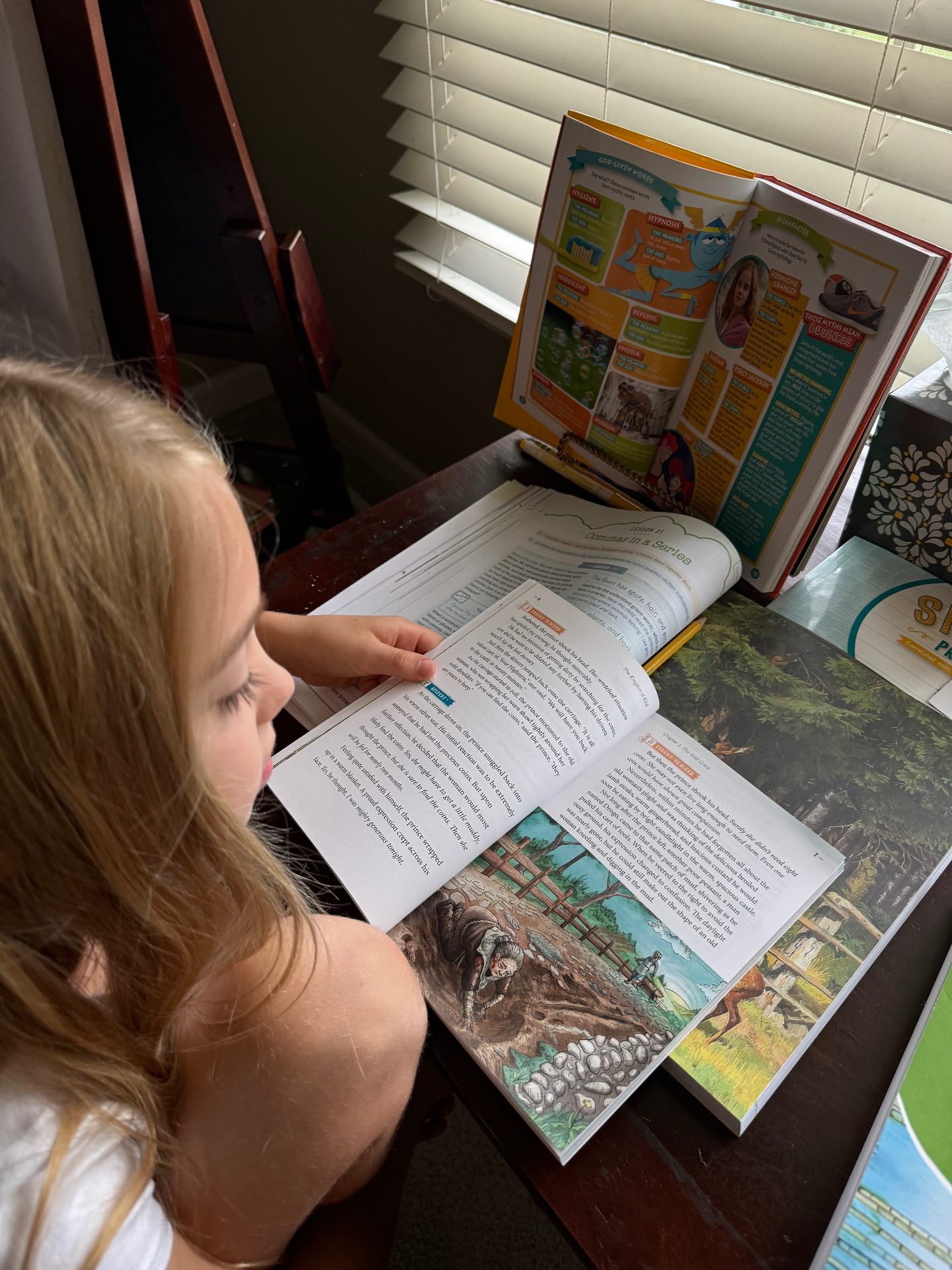
For language arts we use The Good and the Beautiful and the kids absolutely love their stories. Heads up that this curriculum does include some religion woven in, so just be aware if you are looking specifically for something secular. We also lean heavily on living books, narration, and a simple grammar workbook. The kids read constantly, both on their own and out loud with me, and that does most of the heavy lifting.
For science we follow rabbit trails. If they are obsessed with something, we go deep. We pull in dissection kits, library stacks, YouTube creators, and hands on experiments around whatever has their attention. A few supplies we keep on hand for spur of the moment experiments: an apron for painting and messy projects, safety goggles so little eyes are protected, and a science lab set so my kitchen dishes are not constantly being borrowed (ha). If you are just getting started, this beginner science kit is wonderful because the kids can read the instructions and run the experiments mostly on their own while you supervise from a safe distance.
If you are just starting out
Here is the simple game plan I wish someone had handed me on day one.
1. Look up your state's homeschool laws and regulations. Every state is different. The easiest place to start is HSLDA's state by state map. Click your state and you will see exactly what is required of you, notice of intent, record keeping, testing, all of it. Start here before anything else.
2. Figure out your teaching philosophy. There are quite a few styles out there, and knowing the basics helps you stop spinning your wheels. Here is a quick rundown of the most common ones:
Classical follows the trivium, grammar in the early years (memorization and facts), logic in the middle years (asking why), and rhetoric in the high school years (forming and defending ideas). Heavy on great books, Latin, and writing.
Charlotte Mason is rich in living books instead of textbooks, short focused lessons, lots of time outside, nature journaling, narration where the child tells the lesson back to you, and a deep love for beauty, art, and music.
Waldorf is built around developmental stages with a strong emphasis on imagination, handwork, art, music, and rhythm. Academics are introduced more gradually, screens are very limited, and the early years are protected for play.
Montessori is hands on and child led with specially designed materials. Kids work at their own pace in mixed age settings and are trusted with real, practical work.
Unschooling is fully interest led. The child's curiosity drives what they learn, and the parent's job is to surround them with rich opportunities, books, conversations, and real world experiences.
Unit Studies pick one topic, say oceans or pioneers, and weave every subject through it for a few weeks. Great for keeping siblings of different ages learning together.
Traditional mirrors what most of us grew up with, textbooks, workbooks, and grade level scope and sequence. Easy to step into if structure is what your family needs.
If I am being honest, we are pretty eclectic. We pull from a bunch of different styles because I have never been one to put all my eggs in one basket, and kids change so much from one year to the next. What worked last fall might not work this spring, and that is okay.
3. Find your people. Reach out online, look for local co ops, plan meet ups. Community changes everything, for the kids and for you.
4. Give yourself grace for the first few months. It is going to feel weird. That is normal. You are deschooling yourself too.
Let's talk about the hard days
With anything this beautiful, please remember it is NOT always easy. You will have so many moments that remind you exactly why you are doing what you are doing, but you also need to hear this part out loud. When you send your kids off to school, you get six to eight hours of alone time, whether that is at work or at home getting things done. For us, there is none of that. I am with our children 24/7.
Now that they are getting a little older, I am starting to sign them up for outside classes, letting friends take them for a day, and learning to carve out some me time to do things that fill me up and help our family. Somewhere along the way parents started believing we have to forget about ourselves the second we have kids. I do not believe that for a second. It is so important to make space for the things that light you up too. For me, that is this, content creating, traveling, sharing what we are building. It has always been a passion of mine and I do not feel one bit selfish for doing it, and you should not either.
You will have days where the kids would so much rather play outside than open a workbook, and honestly? Sometimes that is exactly what they need. We teach year round on purpose so we can actually soak up the good weather here in Illinois when it finally shows up. If that means we lean harder into lessons through the long winter months and let summer breathe a little, so be it. That trade off is one of the gifts of doing school this way. There are absolutely days I do not want to teach or dissect an owl pellet either, and guess what? We do not. The freedom to listen to what our family actually needs that day is something we will never take for granted.
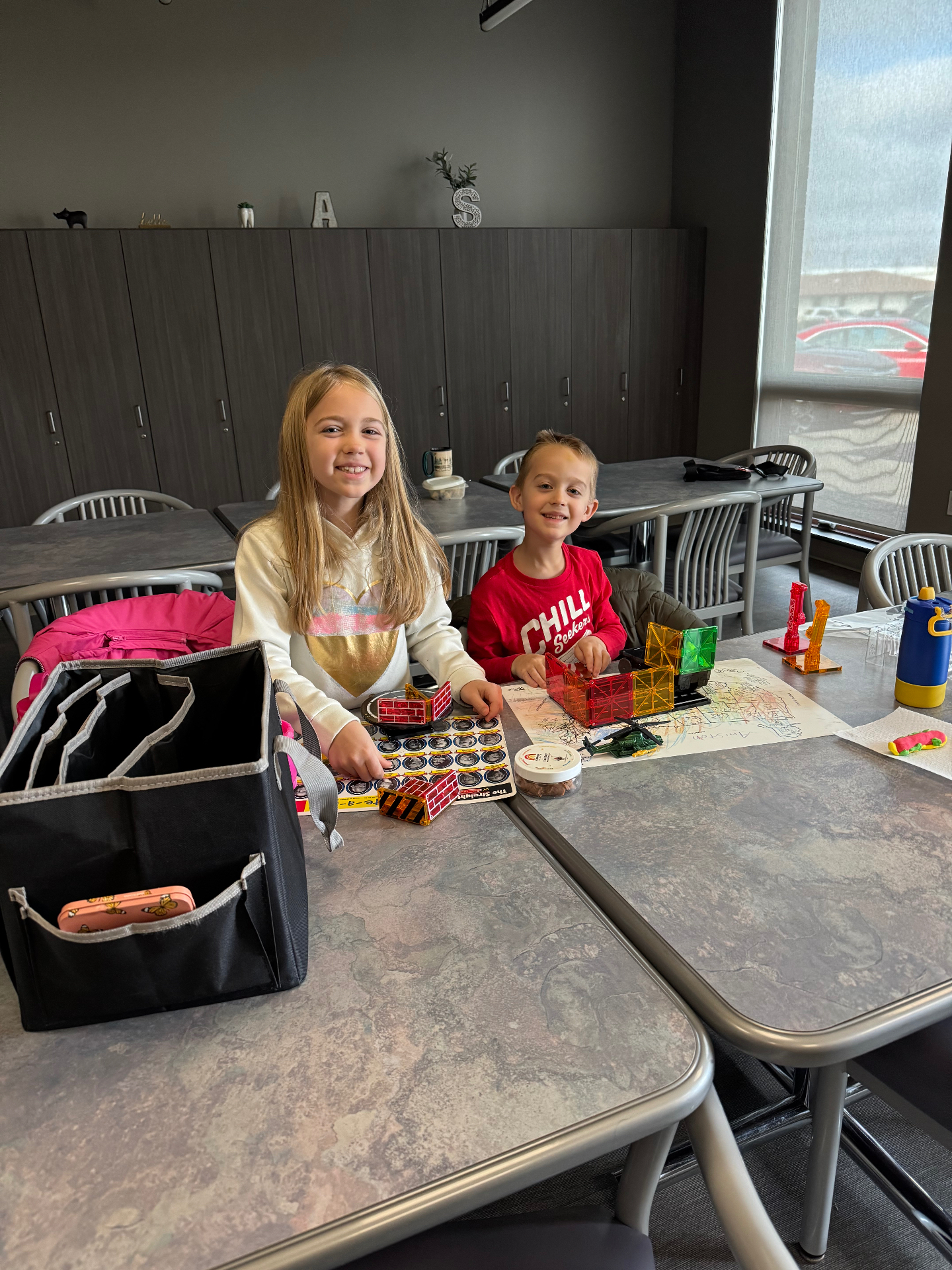
When work and homeschool collide
Because I currently still work part time as a dental hygienist (and yes, I officially quit, so September 2026 will be my last month doing that), there were absolutely days where I did not have anyone to watch the kids and they had to come to work with me. In between patients I would go back to check on them, answer questions on their schoolwork, bring out games, handwriting, snacks, all of it, treating it like a normal travel day. Once schoolwork was done they would watch a movie. I really tried not to let this become a regular thing, but it happened, and it got to the point where I started asking myself, how can I work remotely and stop dragging them along when no one is available?
Have I mentioned being a parent is hard? This lifestyle does not come with a playbook. But listening to other families and what they do gives you the chance to decide what would work well for your family and what would not. Each day, you get a little more confident that what you are doing is enough, and if it is not, you find the resources to grow. You are an amazing parent for taking the time to read all of this and dig into resources. That alone tells me you will do just about anything to make sure your child thrives. Whether you are public, private (like we were), or homeschool, parents who actively ask questions, research, and try their absolute best are the parents I want to be in community with.
Resources that helped us
These are the books that either shaped how we teach or completely shifted the way we think about learning. They honestly cracked my whole brain open in the best way when I was first starting out. If you only read one, start with whichever cover speaks to you.
The Brave Learner by Julie Bogart
Homeschool Bravely by Jamie Erickson
The Call of the Wild and Free by Ainsley Arment, a beautiful permission slip to let childhood feel like childhood again while still raising curious, capable kids.
Teaching from Rest by Sarah Mackenzie, a short, soul filling read for the homeschool mom who feels like she is constantly behind.
Free to Learn by Peter Gray, a deep dive into how play and self directed learning shape happier, more capable humans.
The Well Trained Mind by Susan Wise Bauer, the classical education roadmap from kindergarten through high school. Even if you do not go fully classical, the framework is gold.
The Anxious Generation by Jonathan Haidt, a powerful look at why our kids are struggling more than ever, the role of phones, social media, and the loss of free play, and what we can do to give our kids back a childhood that actually builds resilient, capable humans. This book was a huge confirmation for us in choosing a slower, more present way to raise and educate our kids.
Practical learning resources
These are the free or almost free places we lean on all the time. Bookmark them, your future self will thank you.
Libby and Hoopla, free audiobooks, ebooks, magazines, and even movies through your local library card. Grab a library card for every kid in your house, link these apps to it, and you have a free library in your pocket. We listen to Libby audiobooks on almost every road trip.
National Park Service educational resources, packed with lesson plans, virtual field trips, and the Junior Ranger program. Our kids have earned badges all over the country and it turns every park visit into a learning day. Also do not miss Every Kid Outdoors, a free program that gives every 4th grader (and their family) a free annual pass to national parks, forests, and other federal lands for an entire school year. It is one of the best homeschool perks out there.
NASA STEM engagement, free STEM activities, printables, and projects sorted by grade level. Our kids will sit through anything if it involves space.
Smithsonian Learning Lab and the Smithsonian for kids hub, millions of museum resources, interactive lessons, and primary sources you can pull into any subject. It is basically a free museum in your living room.
Other resources to help you get started
Home School Legal Defense Association (HSLDA), the first place to go for state by state homeschool laws, legal updates, record keeping templates, and answers to almost every "is this legal" question you will have along the way. Their state laws map is the single fastest way to know what your state requires.
National Home Education Research Institute (NHERI), where I send anyone who tells me homeschool kids fall behind. It is loaded with peer reviewed statistics and academic studies on homeschooling, academic outcomes, social development, and adult life outcomes. Real research, not opinions.
Tied To The Land podcast episode, want to hear more of our story? We sat down with them and went deep on how we got here, how we homeschool, and what life actually looks like behind the scenes.
I will keep adding to this list as we find new favorites. If you want updates straight to your inbox, the easiest way is to subscribe to The Venture Note in the footer of this site.
In the meantime, if you have specific questions about how we got started, what curriculum we are using right now, or how we homeschool while traveling, send us a message on Instagram @the.ventureseekers. I read every single one.
A quick word on cost
Cost wise, homeschooling is way cheaper than private school but it is more expensive than public school. You fit in what you can with your budget, and every year looks a little different. If socialization and curriculum are your main priorities one year, maybe pull back on field trips that season. The next year might flip. Give yourself permission to let it shift.
One of my favorite hacks: for birthdays and Christmas, ask family for memberships to your local zoo, children's museum, science center, aquarium, or experience based gifts. Keep an Amazon wish list going with the things the kids would actually love (like the science kit we talked about above) so grandparents and aunts and uncles can grab something that doubles as a gift AND a homeschool resource. We have done this for years and it is a game changer for both our budget and our school year.
Also worth knowing: check with your state, because some states offer grants, tax credits, or education savings accounts for homeschool families that can really take the sting out of the cost. Unfortunately for us here in Illinois, it is not much, but what we do get is the freedom to teach our children the way we feel is best without a ton of regulations and red tape. So for us? We will happily pay a little more for that freedom.
One last thing
This post is not here to convince you that you have to homeschool. It is here for the parent who was once me, sitting in a pickup lane with tears in my eyes wondering, "Can I actually do this? Is it even possible? I am so scared." You can do this. It is hard, beautiful, holy work, and I promise you will never look back and wish you had spent less time with your kids.
Thanks for taking the time to read my novel. As you can see, I have a lot of feelings and thoughts on this, some you may agree with and some you may not, and the beautiful thing? That is okay. That is exactly why I love homeschooling. It makes you think outside the normal box and figure out what works best for YOU and YOUR family.
Until next time, keep seeking adventure together.
-Brittany, The Venture Seekers
How did this post hit for you?
You might also like
More adventures we think you'll enjoy next.